









 Hide
Hide
 Show all


 Email this article


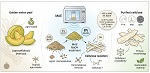
Isolation and Characterization of Cellulose from Golden Melon (Cucumis melo L.) Fruit Peel Using Microwave-Assisted Extraction
Abstract
Keywords
Full Text:
PDFReferences
[1] R. S. Riseh, M. G. Vazvani, M. Hassanisaadi, and V. K. Thakur, “Agricultural wastes: A practical and potential source for the isolation and preparation of cellulose and application in agriculture and different industries,” Ind. Crops Prod., vol. 208, p. 117904, 2024. [Online]. Available: https://doi.org/10.1016/j.indcrop.2023.117904
[2] T. Garg, S. Arora, and R. Pahwa, “Cellulose and its derivatives: Structure, modification, and application in controlled drug delivery,” Futur. J. Pharm. Sci., vol. 11, p. 76, 2025. [Online]. Available: https://doi.org/10.1186/s43094-025-00834-2
[3] D. Trache, A. F. Tarchoun, M. Derradji, T. S. Hamidon, N. Masruchin, and N. Brosse, et al., “Nanocellulose: From fundamentals to advanced applications,” Front. Chem., vol. 8, art. 392, pp. 1–33, 2020. [Online]. Available: https://doi.org/10.3389/fchem.2020.00392
[4] E. Erniati, H. Suhardiyanto, R. Hasbullah, and S. Supriyanto, “Artificial neural networks to predict melon (Cucumis melo L.) production in tropical greenhouse, Indonesia,” J. Keteknikan Pertan., vol. 11, no. 2, pp. 193–204, 2023. [Online]. Available: https://doi.org/10.19028/jtep.011.2.193-204
[5] R. Gómez-García, D. A. Campos, A. Oliveira, C. N. Aguilar, A. R. Madureira, and M. Pintado, “A chemical valorisation of melon peels towards functional food ingredients: Bioactives profile and antioxidant properties,” Food Chem., vol. 335, p. 127579, 2021. [Online]. Available: https://doi.org/10.1016/j.foodchem.2020.127579
[6] T. Makaveckas, A. Šimonėlienė, and V. Šipailaitė-Ramoškienė, “Lignin valorization from lignocellulosic biomass: Extraction, depolymerization, and applications in the circular bioeconomy,” Sustainability, vol. 17, no. 21, p. 9913, 2025. [Online]. Available: https://doi.org/10.3390/su17219913
[7] R. Gómez-García, S. C. Sousa, O. L. Ramos, D. A. Campos, C. N. Aguilar, and A. R. Madureira, et al., “Obtention and characterization of microcrystalline cellulose from industrial melon residues following a biorefinery approach,” Molecules, vol. 29, no. 14, p. 3285, 2024. [Online]. Available: https://doi.org/10.3390/molecules29143285
[8] A. Adewuyi and F. V. Pereira, “Isolation and characterization of cellulose from underexploited golden melon skin,” Makara J. Sci., vol. 22, no. 3, pp. 121–126, 2018. [Online]. Available: https://doi.org/10.7454/mss.v22i3.7548
[9] N. P. Yupa, H. Purwaningsih, and T. Kemala, “Synthesis and characterization of corn husk (Zea mays L.) cellulose using microwave-assisted extraction (MAE),” J. Kim. Sains Apl., vol. 26, no. 7, pp. 268–275, 2023. [Online]. Available: https://doi.org/10.14710/jksa.26.7.268-275
[10] E. Dan, A. J. McCue, D. Dionisi, and C. Fernández Martín, “On the potential of microwave heating to convert waste into added-value chemicals and materials: A review,” Philos. Trans. A Math. Phys. Eng. Sci., vol. 383, no. 2297, p. 20240071, 2025. [Online]. Available: https://doi.org/10.1098/rsta.2024.0071
[11] A. Bahndral, R. Shams, K. K. Dash, N. A. Ali, A. M. Shaikh, and B. Kovács, “Microwave assisted extraction of cellulose from lemon grass: Effect on techno-functional and microstructural properties,” J. Agric. Food Res., vol. 16, p. 101170, 2024. [Online]. Available: https://doi.org/10.1016/j.jafr.2024.101170
[12] A. Valdés, G. Mondragon, M. C. Garrigós, A. Eceiza, and A. Jiménez, “Microwave-assisted extraction of cellulose nanocrystals from almond (Prunus amygdalus) shell waste,” Front. Nutr., vol. 9, p. 1071754, 2022. [Online]. Available: https://doi.org/10.3389/fnut.2022.1071754
[13] Q. Ji, X. Yu, A. E.-G. A. Yagoub, L. Chen, and C. Zhou, “Efficient removal of lignin from vegetable wastes by ultrasonic and microwave-assisted treatment with ternary deep eutectic solvent,” Ind. Crops Prod., vol. 149, p. 112357, 2020. [Online]. Available: https://doi.org/10.1016/j.indcrop.2020.112357
[14] Y. Mao, A. Gerrow, E. Ray, N. D. Perez, K. Edler, and B. Wolf, et al., “Lignin recovery from cocoa bean shell using microwave-assisted extraction and deep eutectic solvents,” Bioresour. Technol., vol. 372, p. 128680, 2023. [Online]. Available: https://doi.org/10.1016/j.biortech.2023.128680
[15] E. Şen, E. Göktürk, and E. Uğuzdoğan, “Microwave-assisted extraction of pectin from onion and garlic waste under organic, inorganic and dual acid mixtures,” Food Meas., vol. 18, pp. 3189–3198, 2024. [Online]. Available: https://doi.org/10.1007/s11694-024-02395-z
[16] I. Iliyin, H. Purwaningsih, and T. T. Irawadi, “Isolation and characterization of cellulose from banana stems using microwave heating,” Jurnal Kimia Valensi, vol. 6, no. 2, pp. 169–176, 2020. [Online]. Available: https://doi.org/10.15408/jkv.v6i2.15962
[17] ASTM International, ASTM D1103-60 – Standard Test Method for Alpha-Cellulose in Wood. West Conshohocken, PA, USA: ASTM International, 1977.
[18] Badan Standardisasi Nasional, SNI 8429:2017 – Penentuan Kadar Lignin – Metode Klason. Jakarta, Indonesia: BSN, 2017.
[19] D. E. S. Souza, J. J. Melo, F. F. Santos, A. L. Vasconcelos, A. D. Jesus, L. D. Freitas, et al., “Microwave-assisted vs. conventional extraction of Moringa oleifera seed oil: Process optimization and efficiency comparison,” Foods, vol. 13, no. 19, art. 3141, pp. 1–15, 2024. [Online]. Available: https://doi.org/10.3390/foods13193141
[20] W. Chen, Q. Zhang, X. Lin, K. Jiang, and D. Han, “The degradation and repolymerization analysis on solvolysis liquefaction of corn stalk,” Polymers, vol. 12, no. 10, pp. 1–13, 2020. [Online]. Available: https://doi.org/10.3390/polym12102337
[21] Q. Zhou, A. Ding, L. Zhang, J. Wang, J. Gu, and T. Y. Wu, et al., “Furfural production from the lignocellulosic agro-forestry waste by solvolysis method – A technical review,” Fuel Process. Technol., vol. 255, p. 108063, 2024. [Online]. Available: https://doi.org/10.1016/j.fuproc.2024.108063
[22] R. K. Wardani, H. Holilah, H. Bahruji, Z. A. A. Hamid, S. Suprapto, A. A. Jalil, et al., “The comparison of hydrothermal, ultrasonication and microwave assisted alkalization of cellulose from Borassus flabellifer fruit husk,” Sustain. Chem. Pharm., vol. 39, pp. 1–11, 2024. [Online]. Available: https://doi.org/10.1016/j.scp.2024.101583
[23] K. Q. T. Doan and K. Y. Chiang, “Statistical optimization of cellulose nanocrystal from cotton cloth waste using sulfuric acid hydrolysis and response surface methodology,” Int. J. Environ. Sci. Technol., vol. 21, no. 1, pp. 5691–5704, 2024. [Online]. Available: https://doi.org/10.1007/s13762-023-05384-9
[24] S. Zhao, X. Chen, Z. Fan, R. Ni, X. Liu, Y. Tian, and B. Zhou, “Using lignin degraded to synthesize phenolic foams with excellent flame retardant property,” Colloids Surf. A Physicochem. Eng. Asp., vol. 666, art. 131373, pp. 1–9, 2023. [Online]. Available: https://doi.org/10.1016/j.colsurfa.2023.131373
[25] J. Li, Y.-N. Zha, H.-M. Wang, J.-N. Tian, and Q.-X. Hou, “Advances in lignin chemistry during pulping and bleaching,” Ind. Crops Prod., vol. 229, p. 121004, 2025. [Online]. Available: https://doi.org/10.1016/j.indcrop.2025.121004
[26] K. J. Nagarajan, N. R. Ramanujam, M. R. Sanjay, S. Siengchin, B. S. Rajan, K. S. Basha, P. Madhu, and G. R. Raghav, “A comprehensive review on cellulose nanocrystals and cellulose nanofibers: Pretreatment, preparation, and characterization,” Polym. Compos., vol. 42, no. 4, pp. 1588–1630, 2021. [Online]. Available: https://doi.org/10.1002/pc.25929
[27] C. Long, C. Rösch, S. de Vries, H. Schols, and K. Venema, “Correction to cellulase and alkaline treatment improve intestinal microbial degradation of recalcitrant fibers of rapeseed meal in pigs,” J. Agric. Food Chem., vol. 68, no. 52, p. 15535, 2020. [Online]. Available: https://doi.org/10.1021/acs.jafc.0c07502
[28] X. Sun, Y. Su, Y. Hao, J. Zhang, X. Yue, and W. Wang, et al., “Novel process methods for the whole cottonseed: Effect on the digestibility, productivity, fat profile, and milk gossypol levels in lactating dairy cows,” Front. Nutr., vol. 9, p. 801712, 2022. [Online]. Available: https://doi.org/10.3389/fnut.2022.801712
[29] H. Wang, M. Shi, Z. Ma, X. Zhang, H. Shan, and X. Xu, et al., “Metabolomics study revealed the effects of CaO-treated maize straw on the rumen metabolites,” Animals, vol. 15, no. 5, p. 674, 2025. [Online]. Available: https://doi.org/10.3390/ani15050674
[30] I. Kurniaty, U. H. Habibah, D. Yustiana, and I. M. Fajriah, “Proses delignifikasi menggunakan NaOH dan amonia (NH₃) pada tempurung kelapa,” J. Integr. Pros., vol. 6, no. 4, pp. 197–201, 2017. [Online]. Available: https://doi.org/10.36055/jip.v6i4.2546
[31] B. Irawan, A. Darmawan, A. Roesyadi, and D. H. Prajitno, “Improving reaction selectivity with NaOH charges and reaction time in the medium consistency oxygen delignification process,” Int. J. Technol., vol. 11, no. 4, pp. 764–773, 2020. [Online]. Available: https://doi.org/10.14716/ijtech.v11i4.3499
[32] C. Zheng, J. W. Cone, A. van Peer, J. J. P. Baars, and W. H. Hendriks, “Conversion of lignocellulosic biomass into valuable feed for ruminants using white rot fungi,” J. Anim. Physiol. Anim. Nutr., vol. 109, no. 3, pp. 800–811, 2025. [Online]. Available: https://doi.org/10.1111/jpn.14099
[33] H. R. Permatasari, F. Gulo, and B. Lesmini, “Pengaruh konsentrasi H₂SO₄ dan NaOH terhadap delignifikasi serbuk bambu (Gigantochloa apus),” J. Penelit. dan Pendidik. Kim., vol. 1, no. 2, pp. 131–140, 2014. [Online]. Available: https://doi.org/10.36706/jppk.v1i2.1891
[34] R. Javier-Astete, J. Jimenez-Davalos, and G. Zolla, “Determination of hemicellulose, cellulose, holocellulose and lignin content using FTIR in Calycophyllum spruceanum (Benth.) K. Schum. and Guazuma crinita Lam.,” PLoS One, vol. 16, no. 10, p. e0256559, 2021. [Online]. Available: https://doi.org/10.1371/journal.pone.0256559
[35] F. Meng, G. Wang, X. Du, Z. Wang, S. Xu, and Y. Zhang, “Extraction and characterization of cellulose nanofibers and nanocrystals from liquefied banana pseudo-stem residue,” Compos. B Eng., vol. 160, pp. 341–347, 2018. [Online]. Available: https://doi.org/10.1016/j.compositesb.2018.08.048
[36] A. Boukir, S. Fellak, and P. Doumenq, “Structural characterization of Argania spinosa Moroccan wooden artifacts during natural degradation progress using infrared spectroscopy (ATR-FTIR) and X-ray diffraction (XRD),” Heliyon, vol. 5, no. 9, p. e02477, 2019. [Online]. Available: https://doi.org/10.1016/j.heliyon.2019.e02477
[37] S. Biswas, T. Rahaman, P. Gupta, R. Mitra, S. Dutta, E. Kharlyngdoh, et al., “Cellulose and lignin profiling in seven, economically important bamboo species of India by anatomical, biochemical, FTIR spectroscopy and thermogravimetric analysis,” Biomass Bioenerg., vol. 162, p. 106362, 2022. [Online]. Available: https://doi.org/10.1016/j.biombioe.2022.106362
[38] A. Singh, B. Ranawat, and R. Meena, “Extraction and characterization of cellulose from halophytes: Next generation source of cellulose fibre,” SN Appl. Sci., vol. 1, p. 1311, 2019. [Online]. Available: https://doi.org/10.1007/s42452-019-1160-6
[39] N. Montoya-Escobar, D. Ospina-Acero, J. A. Velásquez-Cock, C. Gómez-Hoyos, A. S. Guerra, P. F. G. Rojo, et al., “Use of Fourier series in X-ray diffraction (XRD) analysis and Fourier-transform infrared spectroscopy (FTIR) for estimation of crystallinity in cellulose from different sources,” Polymers, vol. 14, no. 23, pp. 1–16, 2022. [Online]. Available: https://doi.org/10.3390/polym14235199
[40] A. F. Tarchoun, D. Trache, T. M. Klapötke, M. Derradji, and W. Bessa, “Ecofriendly isolation and characterization of microcrystalline cellulose from giant reed using various acidic media,” Cellulose, vol. 26, no. 1, pp. 7635–7651, 2019. [Online]. Available: https://doi.org/10.1007/s10570-019-02672-x
[41] P. S. Rai, S. Unnikrishnan, and A. Chandrashekar, “Influence of alkali treatment on physicochemical and morphological properties of palmyra fibers,” Ind. Crops Prod., vol. 224, p. 120298, 2025. [Online]. Available: https://doi.org/10.1016/j.indcrop.2024.120298
[42] M. H. Mulla, M. N. Norizan, N. F. M. Rawi, M. H. M. Kassim, N. Abdullah, and M. N. F. Norrrahim, “Surface and interfaces effects of concentrations and alkaline treatment durations on sugar palm fiber as structural reinforcement in polymer composites,” J. Nat. Fibers, vol. 22, no. 1, p. 2527277, 2025. [Online]. Available: https://doi.org/10.1080/15440478.2025.2527277
[43] V. Balasubramani, K. J. Nagarajan, M. Karthic, and R. Pandiyarajan, “Extraction of lignocellulosic fiber and cellulose microfibrils from agro waste-palmyra fruit peduncle: Water retting, chlorine-free chemical treatments, physio-chemical, morphological, and thermal characterization,” Int. J. Biol. Macromol., vol. 259, pt. 2, p. 129273, 2024. [Online]. Available: https://doi.org/10.1016/j.ijbiomac.2024.129273
[44] S. Zidi, “Cellulose of sisal fibers integration in papermaking: Mechanical and thermal characterization,” Multiscale Multidiscip. Model. Exp. Des., vol. 8, p. 73, 2025. [Online]. Available: https://doi.org/10.1007/s41939-024-00673-3
[45] S. Srinivasan and S. Venkatachalam, “One pot green process for facile fractionation of sorghum biomass to lignin, cellulose and hemicellulose nanoparticles using deep eutectic solvent,” Int. J. Biol. Macromol., vol. 277, pt. 3, p. 134295, 2024. [Online]. Available: https://doi.org/10.1016/j.ijbiomac.2024.134295
[46] P. T. H. Anh and D. M. Tai, “Closer approach towards the preparation of cellulose and microcrystalline cellulose from corn husks,” Chem. Eng. Technol., vol. 47, no. 9, p. e202300379, 2024. [Online]. Available: https://doi.org/10.1002/ceat.202300379
[47] J. Pu, T. Huhe, X. Ding, R. Yuan, S. Zhang, and J. Ren, et al., “Co-production of polysaccharides and platform sugars from wheat straw fermented with Irpex lacteus,” Sustainability, vol. 17, no. 10, p. 4581, 2025. [Online]. Available: https://doi.org/10.3390/su17104581
[48] P. Rani, C. Ram, A. Yadav, D. K. Yadav, K. Bishnoi, and N. R. Bishnoi, “Comparative analysis of various seed sludges for biohydrogen production from alkaline pretreated rice straw,” Nat. Environ. Pollut. Technol., vol. 23, no. 2, pp. 1065–1073, 2024. [Online]. Available: https://doi.org/10.46488/NEPT.2024.v23i02.040